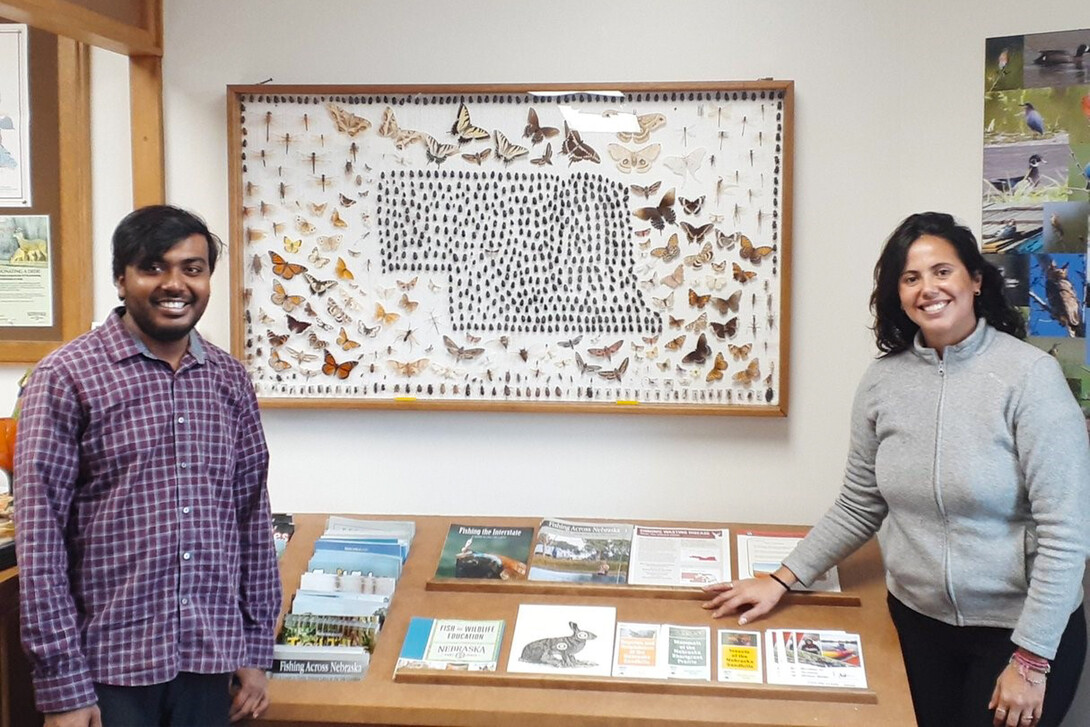
The Agroecosystems Entomology Lab at the West Central Research, Extension and Education Center updated the insect display at the Nebraska Game and Parks office in North Platte.
The project began after Randy Lloyd, a West Central staff member, noticed the aging display while visiting the office to purchase park permits.
“We have a moth here in Nebraska called the luna moth that is usually lime green in color, but it was completely white in the display,” Lloyd said.
Recognizing the condition of the exhibit, Lloyd approached Nebraska Game and Parks to see if they would be interested in having the Agroecosystems Entomology Lab update it. With approval, the lab began the process of refreshing the display.
Insects from the original exhibit were reused when possible and supplemented with additional insects collected from the lab’s blacklight traps, which are traditionally used for research purposes.
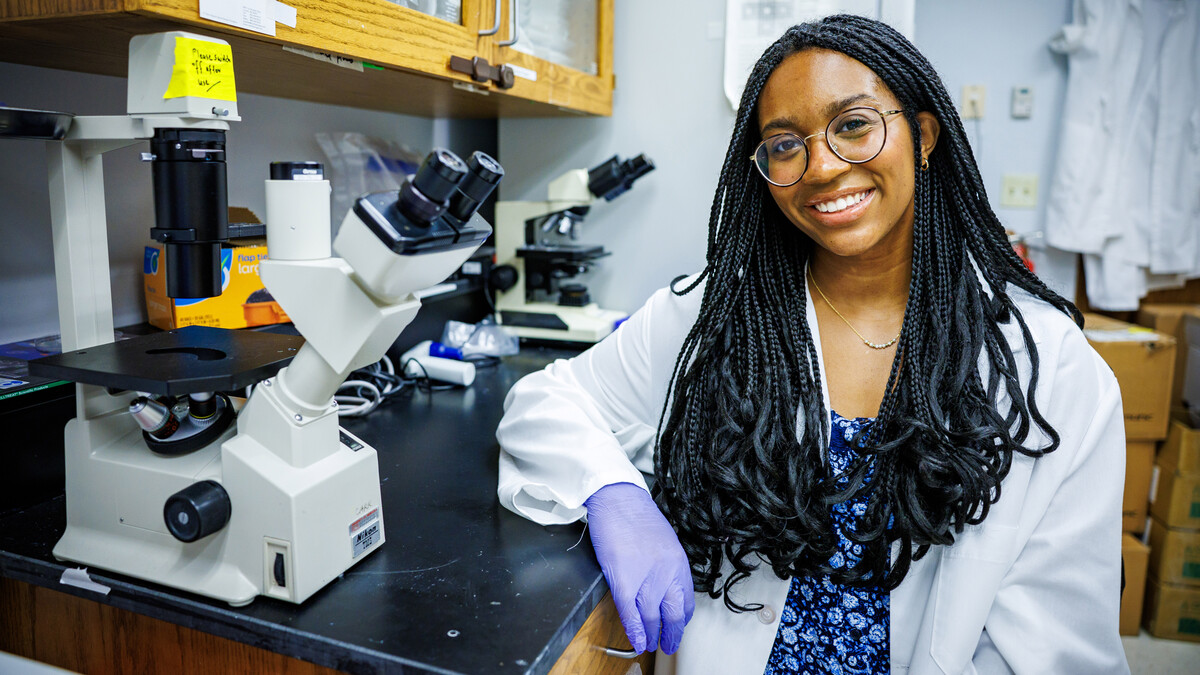
Once a variety of insects had been gathered, students and lab members prepared and pinned the specimens for display.
“To properly pin insects, it depends on the species you are pinning,” said Mizanur Rahman, a member of the entomology lab. “First, you have to collect the insect, kill it by putting it in the freezer or through another method, and then finally you pin the insect according to the protocol for that species.”
The lab took a creative approach to the updated display by incorporating the outline of Nebraska into the design. Scarab beetles were used to form the shape of the state, while a single western bean cutworm moth marked the location of North Platte within its borders.
The placement of the western bean cutworm moth highlighted not only the office’s location, but also the insect’s impact on corn production in the region. Infestations of the pest can cause significant economic losses for farmers.
The completed display allows visitors to see the diversity of Nebraska’s ecosystems through a single exhibit made possible by the collaboration between the Agroecosystems Entomology Lab and Nebraska Game and Parks.
“It never hurts to collaborate with the local community and to show them what we are doing to support agriculture and the North Platte area,” Lloyd said.