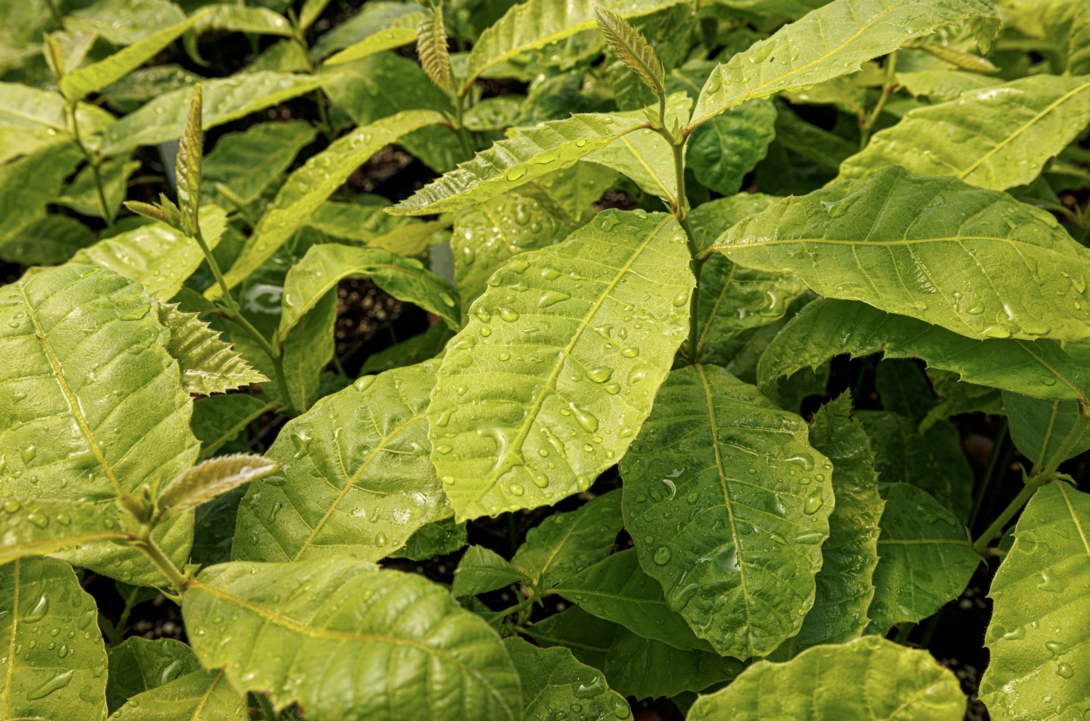
As early as elementary school, most people learn about photosynthesis, the process by which plants turn sunlight into food. However, photosynthesis occurs on uniquely specialized membranes that we have only begun to understand. These must be continually assembled, remodeled and repaired as plants grow and respond to stress.
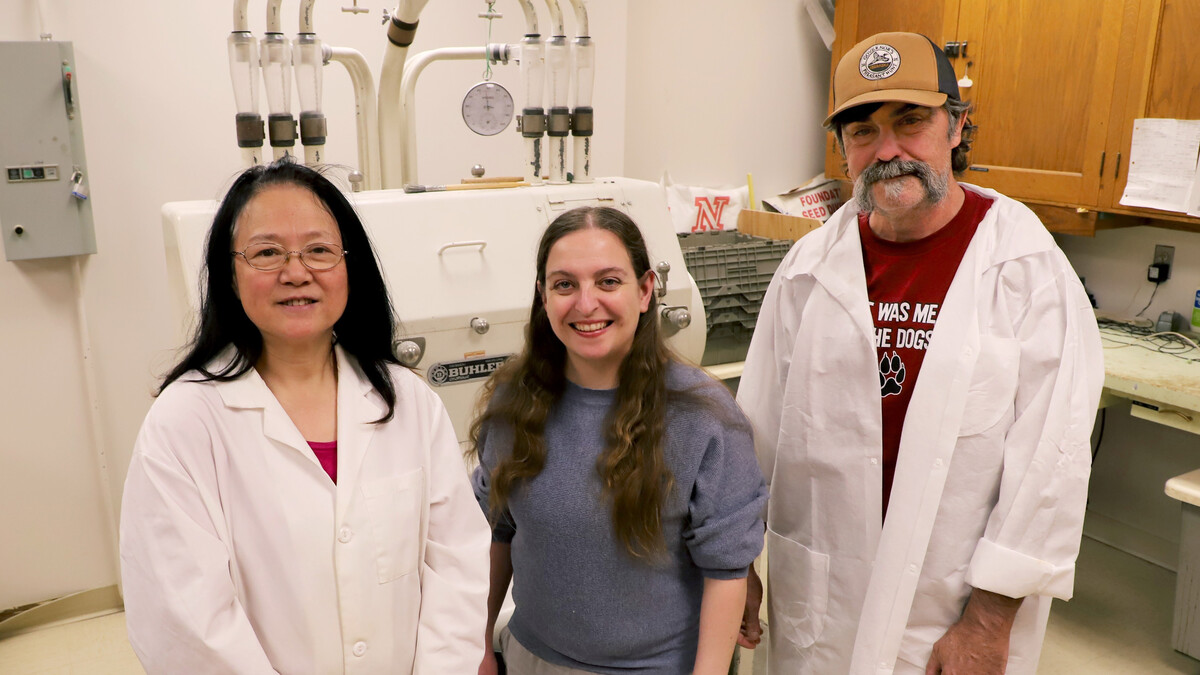
Now, a team of researchers at the University of Nebraska–Lincoln has mapped a new region within chloroplasts — the parts of plant cells responsible for photosynthesis — that serves as an assembly line for photosynthetic membranes. The study, recently published in Nature Communications, identifies a specific area within the cell where the machinery of life is built, repaired and maintained. The discovery is the culmination of a career-long ambition for Rebecca Roston, associate professor in the Center for Plant Innovation and the Department of Biochemistry.
"The idea that we knew where every atom of a photosystem was, but had no idea how its membrane support structures were built, fascinated me as a graduate student," Roston said. "I dreamed that if I ever had my own lab, I would try to figure it out."
So Roston collaborated with a team to accomplish just that.
Graduate student Evan LaBrant led the initial charge, screening proteins to see where they existed within the cell through a strategy developed using fluorescent tagging — a process of attaching a glowing molecule to a target, such as a protein, to better capture images of the targets. He identified several key protein candidates that appeared in specialized regions inside the chloroplast. Joslin Ishimwe joined the process, assisting LaBrant and piloting a new machine learning technique to quantify the thousands of microscopy images he made.
Graduate student Cailin Smith set out to confirm the roles of the candidate proteins LaBrant and Ishimwe identified. She found that when certain proteins were missing, the plant’s membranes became disorganized. Working with Bara Altartouri, Morrison Microscopy Core Director, they discovered that some of these disorganized membranes
had unusually large areas where membranes connect and interact, while others had far fewer of these connection points. Two undergraduate researchers — Lauren Litterer and Allan Tullis — analyzed the microscope images without knowing which samples they were studying to ensure unbiased results. Together, the findings showed these previously unknown proteins play an important role in organizing and maintaining the membranes plants need to turn sunlight into energy.
The final stage of the research involved a large-scale study of all the proteins that could be identified at these specialized regions of the photosynthetic membrane. Graduate Student Alondra Torres-Genera partnered with Michael Naldrett, a research associate professor in the Center for Biotechnology, to identify and measure the proteins present in the cells, while graduate student Fan Huang generated an analysis pipeline and conducted parallel analyses with Torres-Genera.
Their work associated the specialized membrane structures with a distinct set of proteins linked to repairing or reshaping cell membranes. The researchers also found several proteins similar to ones already known to help membranes connect and communicate with each other. This provided strong evidence that the team had identified a real, organized membrane-maintenance system inside chloroplasts — rather than simply detecting stray material from nearby cell structures.
Understanding how plants build and repair their unique membrane structures that support photosynthesis has important implications for the future of agriculture and renewable energy.
“In agriculture, photosynthetic membranes are a major target of stress,” said Roston. “They are easily damanged by temperature extremes, drought or intense sunlight, reducing yield. A better understanding of how plants assemble and repair structures supporting photosynthesis could help researchers identify new levers to improve resilience — a long-standing goal for crop improvement.”
At the same time, photosynthetic membranes represent one of nature’s most effective solar-energy conversion systems, she said. By clarifying how plants build robust photosynthetic membranes and maintain their architecture, the work also offers concepts and molecular parts lists that could inform the design of bio-inspired, biomimetic or bio-hybrid membranes for renewable energy applications, such as solar-to-fuel or solar-to-electricity technologies.
The study involved a cross-disciplinary effort utilizing the UNL Proteomics and Metabolomics Facility, and the Morrison Microscopy Core Research Facility.
"This paper is more than a scientific discovery," Roston said. "It is a testament to the resilience and committment of these young researchers who did incredible science."
For more information, contact Rebecca Roston at rroston@unl.edu