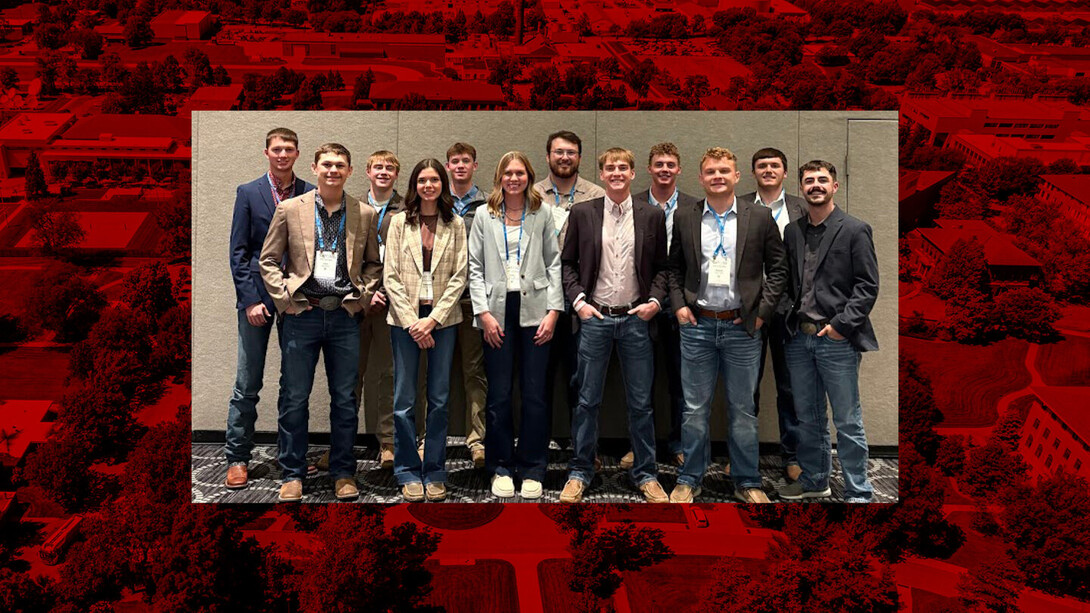
University of Nebraska–Lincoln Agronomy Club members attended and participated in CANVAS 2025, formerly known as the American Society of Agronomy, Crop Science Society of America, Soil Science Society of America International Annual Meeting, Nov. 9–12 in Salt Lake City, Utah.
The Huskers met with agricultural professionals, attended lectures, research symposiums and career workshops and took industry tours in the Wasatch Front region of Utah. During this conference, students also competed in multiple contests.
“CANVAS 2025 was a great experience, and I’m already looking forward to attending in the future,” Jake Burge, a junior agricultural systems technology major, said. “One of my highlights was traveling with fellow members of the UNL Agronomy Club. It was a great opportunity to strengthen friendships, build new connections and meet students from clubs across the country.”
Garrett Kuss, a graduate student in the Doctor of Plant Health Program, chaperoned the students on the trip. Kuss is the student adviser for the agronomy club and the crops judging team.
The Nebraska students competed in the quiz bowl, the crops judging contest, the President’s Agronomy Club presentation and the Agronomic Issues contest.
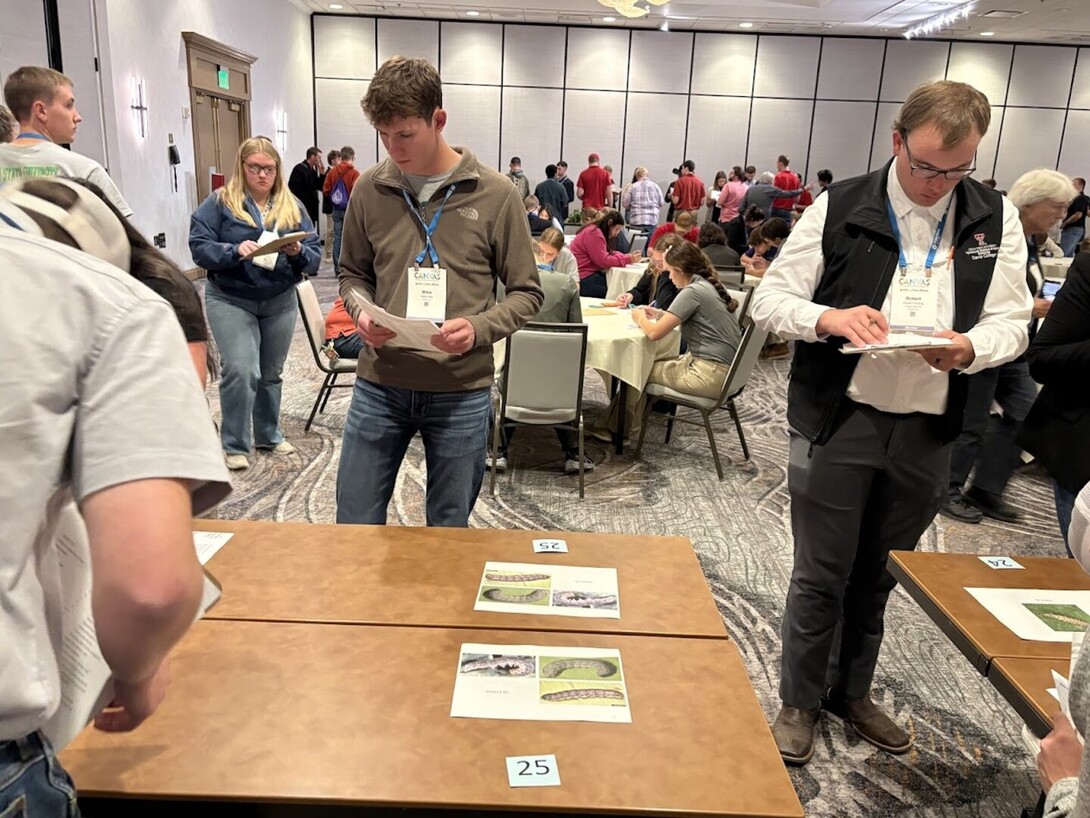
The crops judging contest included three sections — Plant ID, Agronomic Math, and General Knowledge. Students had 45 minutes to complete each station of 30 questions, competing against 30 schools and over 180 other students — a competition record. Gabrielle Clifton, a junior plant biology major, placed 10th individually.
The Husker Agronomic Issues team presented on corn-rotation dependency in Nebraska and offered solutions, including cover crops and establishing new markets for underrepresented crops in the state.
The quiz bowl team made it to the Sweet Sixteen.
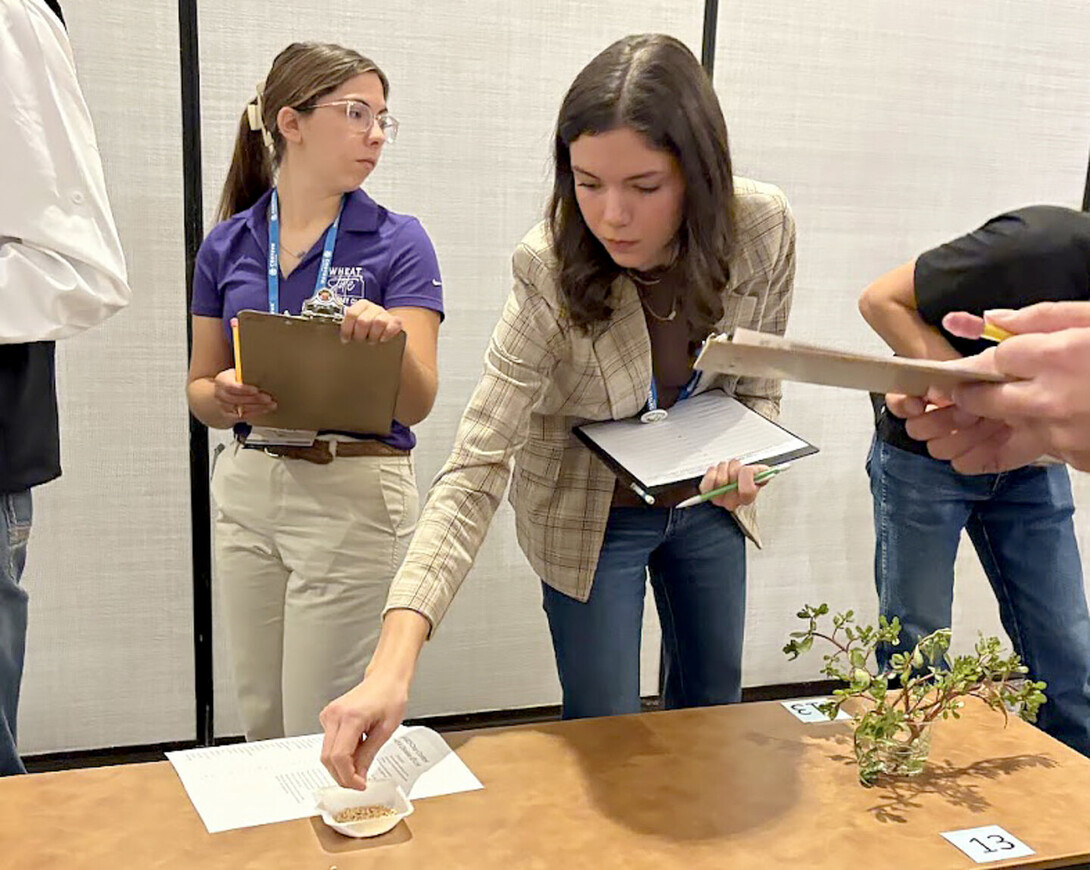
“Among the events, I especially enjoyed the President’s Trophy competition, which was new this year, Burge said. “Every club had a few members present on the activities they host throughout the year. As part of our club’s leadership team, I found this competition to be super beneficial as it sparked several new ideas we’re excited to try.”
The conference also included presentations by graduate students on ongoing research, industry talks by professionals across the country, and keynotes by respected leaders in agriculture discussing the future of ag in the U.S. and worldwide.
Students spent their free time exploring downtown Salt Lake City and conversing with students of agriculture from across the country.
“My favorite part of the trip to Salt Lake City was the industry tour we did on Sunday,” Joel Katzberg, a junior animal science major, said. “It was awesome to get out of the city and see the mountains and farms. It was cool to see a different side of agriculture than we are used to seeing here in Nebraska. Gaining a little insight into how they manage things differently can be useful when making decisions back home.”
Kuss and the students visited the Red Butte Garden and Arboretum, one of the most extensive botanical gardens in the region, with 100 acres of themed gardens and natural areas.
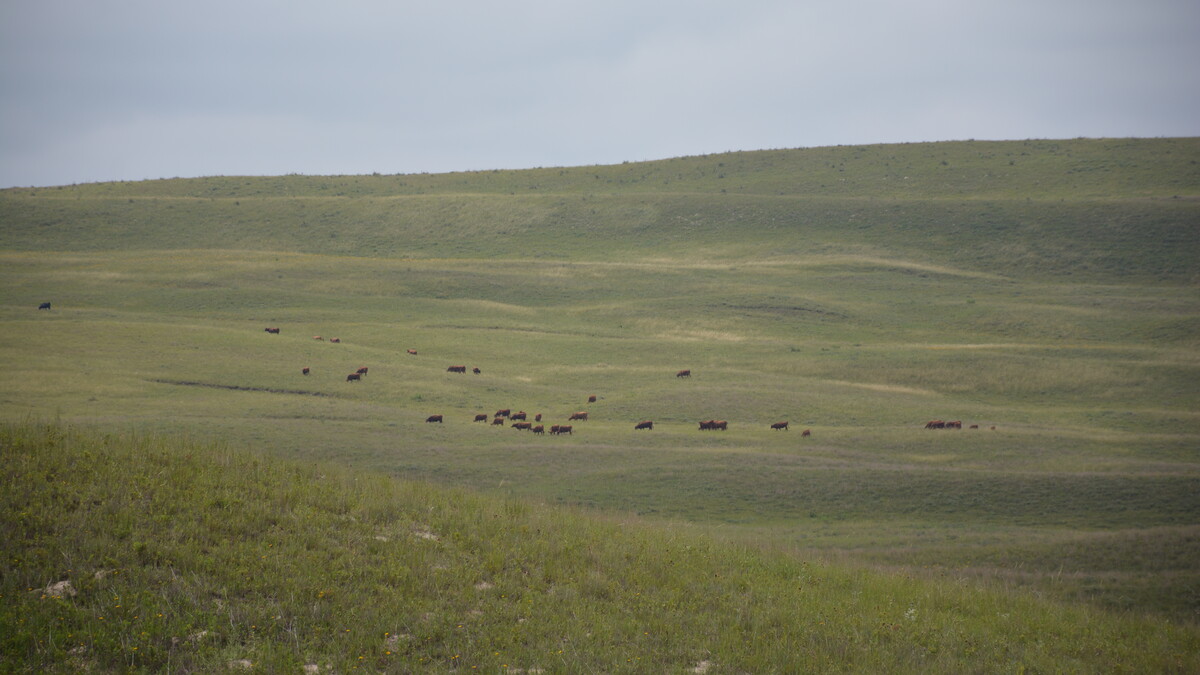
The group visited 3 Springs Land and Livestock to hear from McKinley Smoot, a rancher and professional with the Savory Institute, who runs a small herd of beef cattle and meat chickens near the town of Oakley, Utah. Smoot gave a presentation on his farm’s commitment to healing the land through holistic practices. His methods, he explained, help build topsoil, restore ecological functions, sequester carbon and produce more nutrient-rich meat through measured grazing, which involves moving his 75-head of cattle every three to seven days between multiple 20-acre plots.
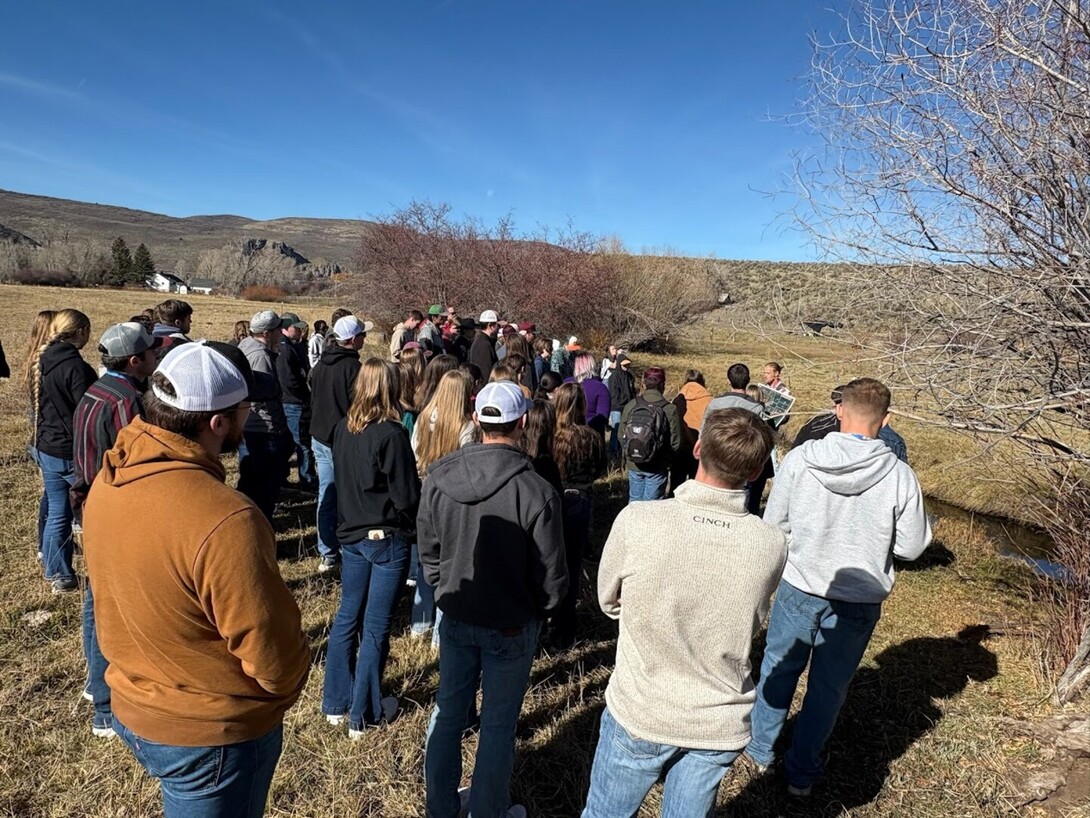
The Huskers also met Albert Wilde, owner of Wild Valley Farms. Wilde and his family farm over 200 cattle and 2,600 sheep. He offered students a look at what it takes to raise sheep and explained how wool types vary across breeds, and where on the sheep they are sheared. Wilde explained to the students that, in addition to his standard farming operation, he and his sons also operate an organic wool pellet fertilizer company. He said he discovered, while trying to solve a problem for his wife's flower garden, that wool increases the water-holding capacity of potted plants and releases nutrients more quickly than other organic fertilizers on the market. Wilde described the process of transforming a novel idea into a viable product and reminded students that “success often goes not to the smartest person, but to the one who keeps looking for solutions.” He noted that his company’s end goal is to help raise the minimum price of low-grade wool to $1 a pound and believes this is necessary to maintain American sheep farming.
“I thought it was such a simple but genius idea,” Nick Daberkow, a junior agronomy major, said. “These pellets are organic, sustainable and made from 100% raw U.S. wool. They can hold a lot of water, keep plants from drying out, and even wick away extra moisture, so they don’t get overwatered. As they expand, they help loosen the soil, and they also slowly release nitrogen, giving plants a steady nutrient source without the harshness of synthetic fertilizers.
“It was exciting to think about how this could someday be used in row-crop systems, helping farmers improve soil health while making good use of wool that would otherwise be thrown away.”
Finally, the team visited the Rose Family Farm, a dairy operation that specializes in raw milk and pasteurized ice cream. Starting in 1874, the Rose family has farmed this land for over 150 years. Rose said that, over the years, the farm’s purpose transformed from supporting a family to shaping one. At one point, fifth-generation owners Aaron and Lisa Rose, not wanting the farm to die, had to choose — reduce the herd to a hobby farm or change the way they operated. Not wanting to see the farm’s legacy die, the family explored bottling and selling raw milk directly to consumers. After finding success in this niche market, the Rose family expanded into ice cream, creating dozens of flavors and opening three storefronts over 10 years.
Aaron Rose told the students that opportunities are available to small-town farmers. “Just because your parents worked hard and farmed the same way for decades does not mean you have to do the same to be successful,” he said.
“The team left the event tired but filled with new knowledge and an excitement to return to future regional and national meetings in a larger capacity,” said Kuss.