Tags
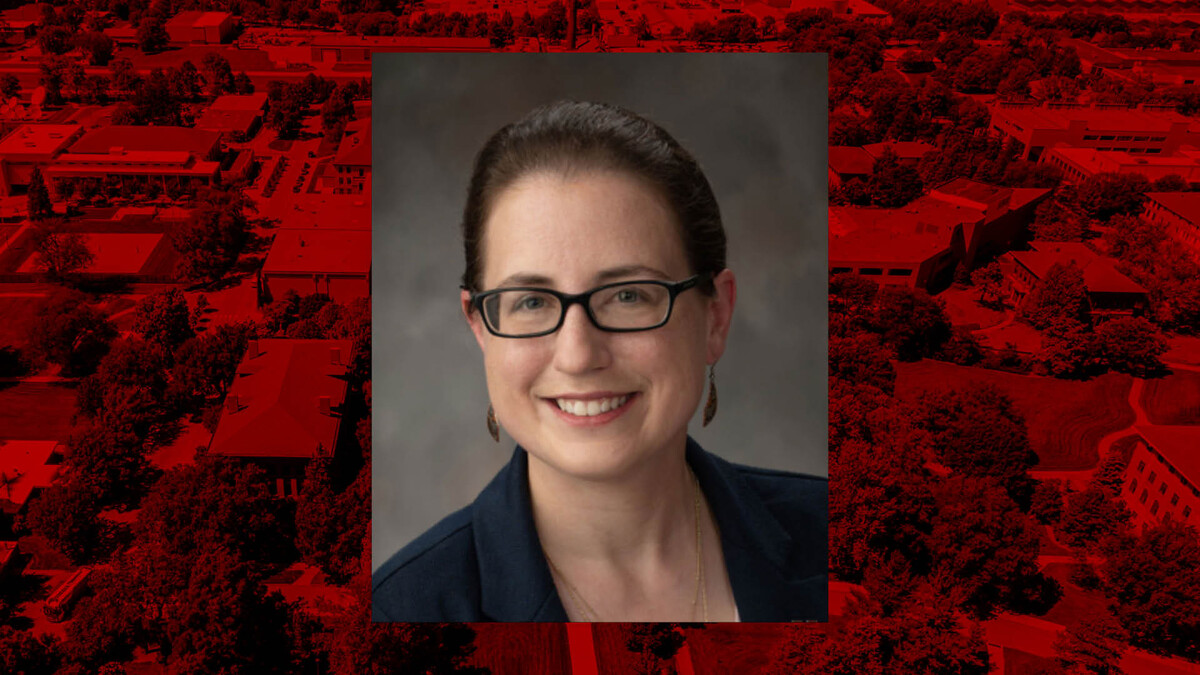
Even though her research on bees can get pretty complicated, Paige Myers’ motivation isn’t: She really, really loves bees.
“I just think bees are super cool,” Myers said. "I was thinking about going to medical school when I first came to Nebraska, but, in my heart, I knew I had this love for bees that I wanted to explore. So, during my freshman year, I got a job working at the Bee Lab.”
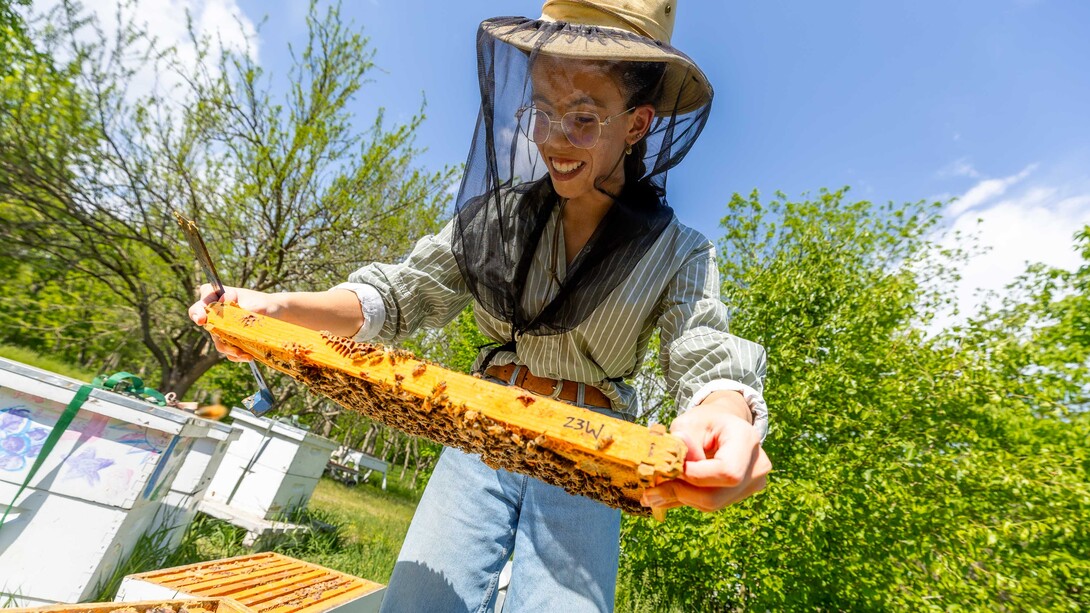
From there, Myers never looked back. Working under a graduate researcher in the Bee Lab, she began digging into her passion and seeing ways she could grow it into a career that supports these essential insects.
“The grad student at the time was doing a wild bee project similar to the one I'm doing today," Myers, who grew up in Lincoln, said. "I got to go out into the field with her to study wild bee populations, and that’s where I realized that I wanted to study bees for my career.” .
Myers has been collecting bee data ever since. Throughout her undergraduate years, Myers earned research funding from the Undergraduate Creative Activities and Research Experiences Program. Her undivided love isn’t only because they’re cute — bees are crucial to our ecosystems, from our farmlands to the gardens we enjoy right here on campus.
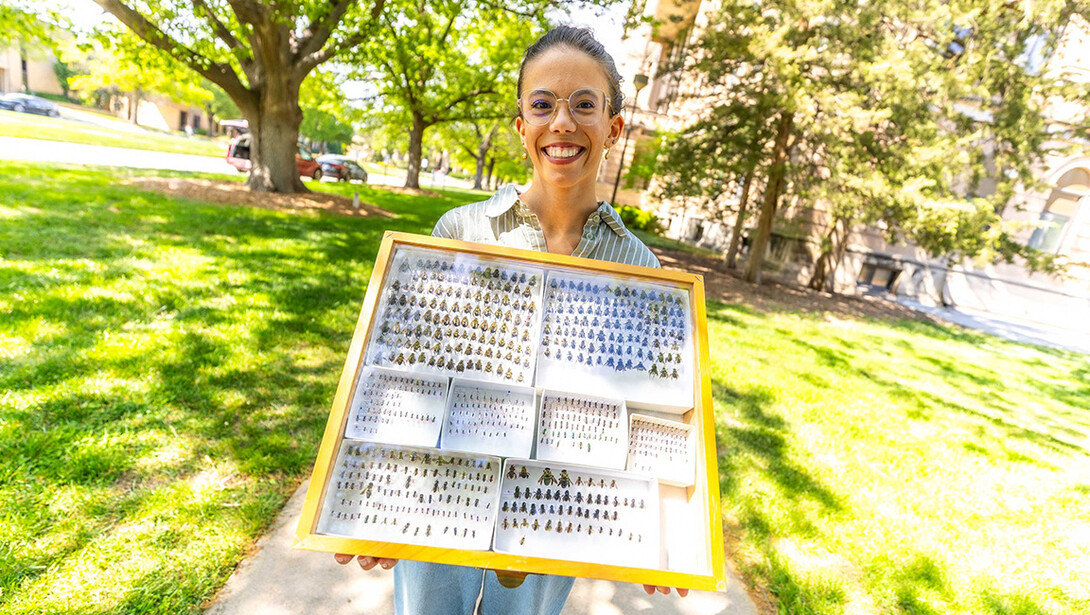
“The focus of my research has been looking at how different landscape designs impact wild bees," Myers said. "Half is looking at landscapes on our campus and seeing how different spaces support our bees, and the other has been looking at creating specific strips of land around agricultural fields that could support more biodiversity.”
All this work, she said, is to help bees do what they do best: make our environment stronger.
“By increasing and supporting their habitats, we can really help our native bee species thrive in ways that nurture our overall ecosystems in Nebraska," Myers said.
After graduating with a Bachelor of Science in December 2024, Myers is now a graduate student in entomology and in her fifth year with the Bee Lab. She couldn’t be more grateful for having a space that nurtured her own educational ecosystem.
“Being able to work in the lab for this long is incredible. My undergraduate research really allowed me to pin down which area I wanted to focus on and help me develop those skills," Myers said. "Every day, I'm able to discover something new that I find fascinating, so I feel really lucky.”