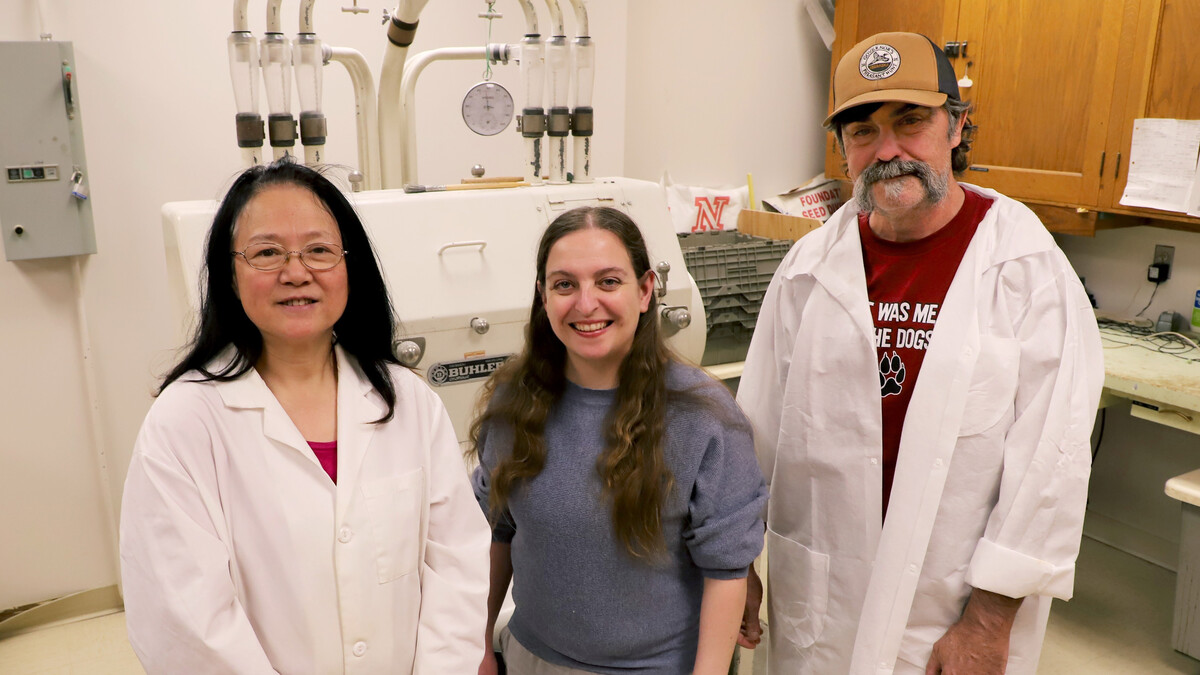
Nebraska Extension work is built on relationships and trust. In an evolving role, Ashley Ahrens, Assistant Extension Educator, will participate in a pilot partnership between Nebraska Extension and the Fred & Pamela Buffett Cancer Center.
Since January of 2023, Ahrens has been the Health and Wellbeing Educator with Dawes, Sioux, Sheridan, and Box Butte County Extension. Her work focuses on supporting the health and well-being of people living in rural communities, meeting individuals and families where they are and connecting them with practical, research-based resources.
“Rural Nebraskans, unfortunately, face persistent health disparities. These include higher rates of chronic disease, increased cancer risk, and reduced access to preventive care and healthcare services,” she said. “Addressing these challenges requires more than individual programs. It requires system-level thinking, strong partnerships, and trusted community connections.”
Over the past few years, Ahrens’ work has evolved from delivering individual education programs to strengthening broader, community-based strategies that support rural health. The pilot partnership will serve all 11 counties of the Nebraska Panhandle.
“The cancer center brings cutting-edge research, clinical expertise, and cancer-related resources that serve the entire state. What they often need, however, is a trusted local connection to communities. That’s where Extension plays a critical role,” Ahrens said.
Through this partnership, Extension educators help:
- Embed cancer prevention and screening education into existing Extension programs
- Share evidence-based screening information in settings people already know and trust
- Partner with local hospitals, clinics, and community organizations
- Serve as a bridge between communities and cancer prevention resources
This work strengthens, not replaces, Extension’s mission and builds on relationships already in place at the local level.
Currently, Nebraska experiences significantly higher rates of eight types of cancer compared to the national average, with a disproportionate burden affecting rural communities. Early detection leads to better treatment and improved survivorship.
- Routine mammography has reduced breast cancer deaths by 30–40 percent
- Pap smear screening has reduced cervical cancer deaths by more than 70 percent since its introduction
- Colorectal cancer death rates have dropped over 50 percent since the 1980s, largely due to screening
- Low-dose CT scans reduce lung cancer deaths by 20–40 percent among high-risk adults
“My job may look a little different, but the heart of the work remains the same. I am deeply grateful for the opportunity to continue serving Nebraskans—helping individuals, families, and communities live healthier, fuller lives through education, prevention, and connection,” she said.