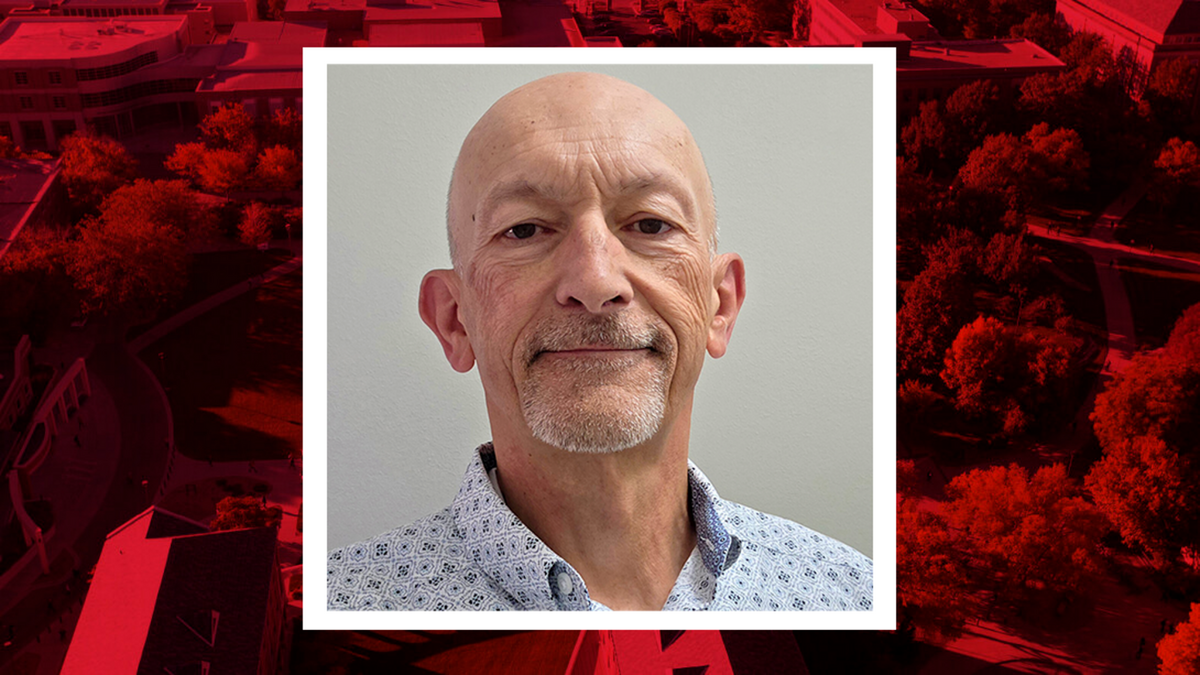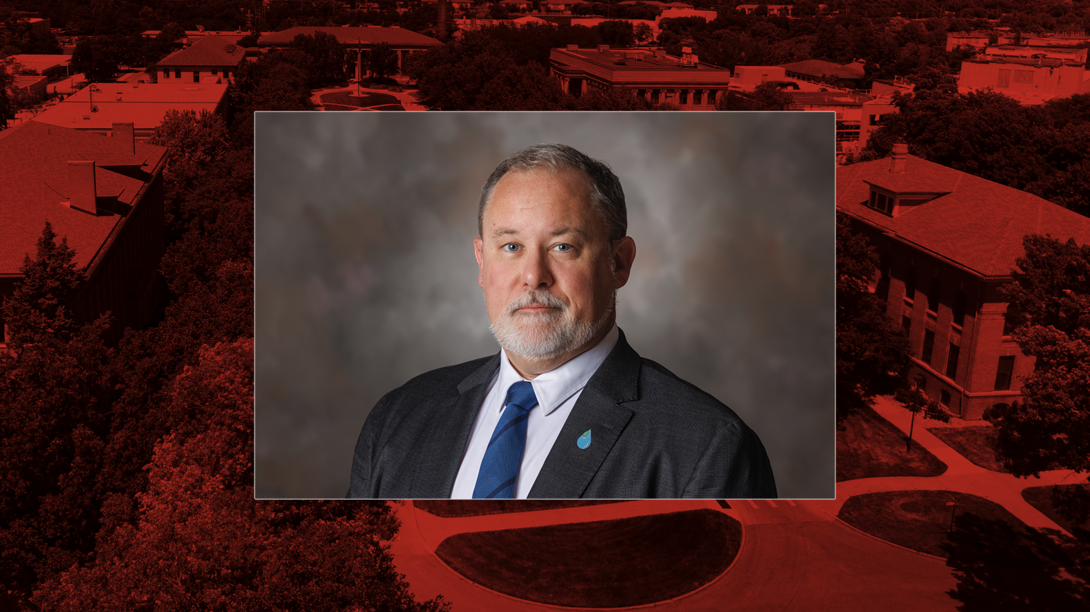
When Joe Sanders arrived in Nebraska earlier this year to lead the Daugherty Water for Food Global Institute (DWFI), he brought with him more than two decades of experience working at the intersection of agriculture, water and global development.
But his path to this role didn’t begin in a boardroom or research lab. It began with a decision to change course.
As a college student, Sanders was on track for medical school, studying biology and preparing for a career in medicine. Then, just before graduating, he realized that path it just didn’t feel right.
“I really realized that this wasn’t the path for me. I had been exposed to quite a bit of new things in college. I became passionate about issues around human rights, environmental development, poverty,” Sanders said.
This exposure sparked his desire to better understand those challenges and to see the world firsthand: which led him to the Peace Corps, and to a remote, mountainous region of Bolivia.
A formative experience
In Bolivia, Sanders lived and worked alongside smallholder farmers in one of the country’s most challenging regions. The experience, he said, was transformative.
“I could see up front the difficulty that exists in being able to find development solutions for people in these kind of situations,” he said.
The experience gave him perspective and sparked a lasting interest in rural development.
Like many Peace Corps volunteers, Sanders said he gained as much as he gave. The experience helped clarify not only his interests, but also the kind of work he wanted to pursue long term.
From there, Sanders moved into international development, joining USAID-funded projects focused on agriculture, irrigation and market access for farmers. Early in his career, in 2002, he was assigned to Afghanistan, helping lead one of the first U.S.-funded agricultural development efforts in the country following decades of conflict.
Learning to lead in complex environments
In Afghanistan, Sanders worked on rehabilitating irrigation systems that had been damaged or neglected—critical infrastructure in a country where agriculture depends heavily on water access.
The experience was, in his words, a “baptism by fire.”
“You’re dealing with big budgets and big responsibilities and in a very challenging place… with a lot of political attention put to it,” he said. “But it also teaches you where you can be effective—and how to find solutions in difficult places.”
More importantly, it reinforced a lesson that would shape his leadership philosophy: context matters.
“Every place has its unique problems, and it’s important to really understand those issues; to contextualize your work,” Sanders said.
Over the next 25 years, Sanders built on those lessons, leading agricultural development efforts across Africa, Asia and Latin America. His work consistently focused on practical, market-driven approaches—helping farmers improve productivity, connect to markets and strengthen their livelihoods.
In Zimbabwe, for example, a project he led helped generate tens of millions of dollars in agricultural output within just a few years, significantly increasing incomes for participating farmers.
A leadership approach grounded in collaboration
Across those experiences, Sanders developed a leadership style rooted in collaboration and shared purpose.
“One of the biggest things I’ve learned over the course of my career is that the best ideas come from the team,” he said.
That approach emphasizes co-creation, bringing together diverse perspectives and expertise to solve complex problems, and ensuring that teams are working toward a common goal.
A new perspective in Nebraska
Now, just a few months into his role at DWFI, Sanders is applying that mindset in a new context: Nebraska.
While he brings deep international experience, he is quick to note that U.S. agriculture, particularly at the scale seen in Nebraska, is new territory.
“I’ve never worked at the scale that agriculture or that farmers operate here in Nebraska,” he said.
What he has seen so far has left a strong impression. Nebraska’s leadership in groundwater management, irrigation innovation and cross-sector collaboration stands out as a unique strength—one that has shaped agricultural systems far beyond the state.
Building on a strong foundation
As he looks ahead, Sanders is focused on building on DWFI’s existing strengths while expanding its reach and impact.
This includes deepening partnerships across Nebraska, engaging with stakeholders and ensuring the institute remains responsive to the needs of farmers, industry and communities. It also means identifying opportunities to extend Nebraska’s expertise, particularly in water management and agricultural innovation, to broader contexts.
His approach is both practical and forward-looking: build on what works, strengthen connections and focus on solutions that can scale.
A pragmatic optimism
Despite the complexity of global water and food challenges, Sanders remains grounded in what he has seen throughout his career.
“What gives me hope is knowing that there are ways to solve these problems… I’ve seen the good and the bad… and I’ve seen projects that work,” he said.
It’s a perspective shaped by decades of experience, and one that will guide his leadership as DWFI continues its work to strengthen water and food systems in Nebraska and around the world.