Three May graduates of the University of Nebraska–Lincoln have been awarded 2026 Graduate Research Fellowships from the National Science Foundation.
The program’s purpose is to help ensure the quality, vitality and strength of the scientific and engineering workforce of the United States. Since 1952, the program has supported outstanding graduate students pursuing research-based master’s and doctoral degrees in science, technology, engineering and mathematics fields, including STEM education.
Nationally, 2,597 Graduate Research Fellowships were offered in 2026. Among the university’s most recent graduates, the recipients are:
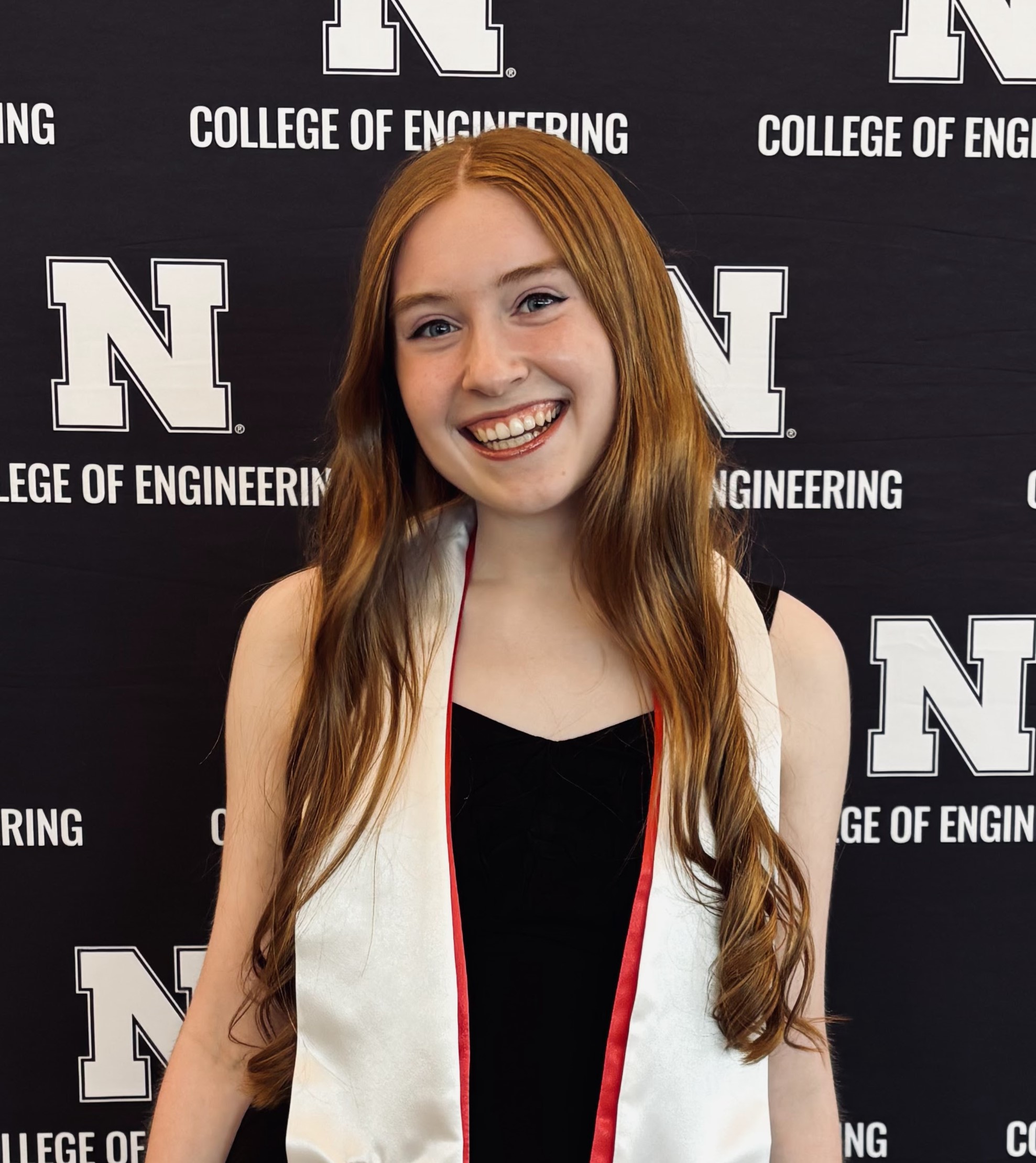
- Gracie Kerr of Omaha, who earned a Master of Science in civil engineering with an emphasis in structural engineering. A Kiewit Scholar, president of the Engineering Student Advisory Board and University Honors Program student in her undergraduate studies, Kerr earned bachelor’s degrees in civil engineering with highest distinction and mathematics with high distinction from Nebraska. She currently works as a graduate research assistant, conducting engineering education research under the advisement of Logan Perry, assistant professor of civil and environmental engineering. Her research has focused on instructor adaptability, civil engineering workforce development and engineering workforce preparedness. She will begin working toward her doctoral degree in engineering education at Virginia Tech in August, intending to become an engineering faculty member.
- Angela Le of Lincoln, who earned a Bachelor of Science in software engineering. For two years, she conducted human-robot interactions research with the NIMBUS lab in the College of Engineering. Le was also an NSF International Research Experiences for Students summer intern in Japan, where she conducted research to develop a portable point of care testing device for fluorescent pathogen detection, targeting applications such as SARS-CoV-2 diagnostics. This fall, she will be a master’s student in industrial and systems engineering at Virginia Tech.
- Hayden Wulf of Kearney, who earned a Master of Science in civil engineering, specializing in structural engineering. In 2025, she earned a Bachelor of Science in civil engineering with highest distinction. Wulf has more than four years of experience in engineering education research under the advisement of Grace Panther, associate professor of civil and environmental engineering. That experience includes a project focused on observing changes in classroom environments and instructional practices over time, particularly during disruptions such as the COVID-19 pandemic. Her current research uses an anti-deficit perspective to examine how visuo-spatial information is imbedded in civil engineering classrooms with the goal of exploring how curriculum can better support students from a variety of backgrounds. In August, Wulf will begin a doctoral program in engineering education at Virginia Tech, with the goal of becoming a structural engineering faculty member.
Additional alumni Abaigeal Aydt, Ritsa Giannakas, Timothy Goldsmith, Aidan Hand and Khaleb Pafford were also offered Graduate Research Fellowships.
Honorable mentions included May graduate Liz Anderson; two graduate students, Madison Gott and Hannah Landwerlen; and other alumni Emma Chesley, Cristian Gonzalez, Aditya Jain, Laura Kirshenbaum and Abigail Ridder.
NSF’s Graduate Research Fellowship Program was established to recruit and support individuals who demonstrate the potential to make significant contributions in STEM, including STEM education. Each fellowship provides three years of support over a five-year period. For each of those three years, NSF provides a $37,000 stipend and $16,000 cost of education allowance.
NSF fellows are anticipated to become knowledge experts who can contribute significantly to research, teaching and innovation in science and engineering. These individuals are crucial to maintaining and advancing the nation’s technological infrastructure and national security, as well as contributing to the economic well-being of society at large.
At Nebraska, the Office of Undergraduate Research and Fellowships advises undergraduate candidates for 30 supported scholarships and fellowships. Graduate student applicants are supported by their advisers and graduate chairs in the academic departments. To learn more, students and campus community members should email Courtney Santos, director of undergraduate research and fellowships, at ucare@unl.edu.