Recognizing a shortage in senior healthcare options in their community, residents of Arapahoe, Nebraska, worked with the Nebraska Cooperative Development Center, an extension program at the University of Nebraska–Lincoln, to form the Republican River Valley Homecare Cooperative. The worker cooperative, which is now accepting clients, will help elderly residents stay in their homes longer.
The idea was in the works for about three or four years. Catherine Bowers, executive director, founder and worker-owner, said the need grew following the closure of the Arapahoe Nursing Home in 2021.
At the same time as the closure, the development center was introducing the worker-cooperative homecare model to Nebraska through a series of educational webinars and articles in spring 2022. A worker-cooperative business structure gives all owners an equal ownership share, allowing owners a say in their business and how it operates in their community.
“The worker owners have an investment in the Arapahoe community and the region they serve,” said Cindy Houlden, cooperative development specialist with the center. “They live there, they’re connected there, they want to be a part of it. They’re in your town; they care about the residents. It’s not just a job.”
After learning about the homecare worker cooperative, Bowers and Linda Fitzsimmons, another worker-owner of the business, began exploring the worker cooperative model along with Heidi Thomas, whose husband was in the long-term care facility. Thomas’ desire to find alternative care connected her with Bowers. Fitzsimmons and Bowers knew each other already, and Fitzsimmons connected with the idea of helping people age in their homes for longer.
Bowers had a background in nursing and recognized the opportunity to meet a need in the community.
“If I could have kept my grandma at home when she needed that level of care, I would have,” Bowers said. “I worked as a charge nurse at a nursing home for a long time, and I heard all these stories from these residents like, ‘If I just had help with these certain things, I could stay home.’”
Fitzsimmons echoed the sentiment that in some cases, aiding clients with a few simple tasks allows them to stay in their homes.
“A lot of these people just need someone to come in and check on them,” she said.
Republican River Valley Homecare started accepting clients in January and is available to serve a 120-mile radius. The business is also seeking more caregivers who would like to be part of the worker cooperative. It offers non-medical care services such as light housekeeping, grocery shopping, cooking and food prep, laundry and bill paying. Staff is also able to offer chore provider services (i.e., snow removal) through the Department of Health and Human Services Waiver Program.
“In our area, if you don’t have someone to remove your snow, then the elderly run into the chance of the mailman not delivering the mail, or the pharmacy delivery worker unable to deliver your medication,” Bowers said.
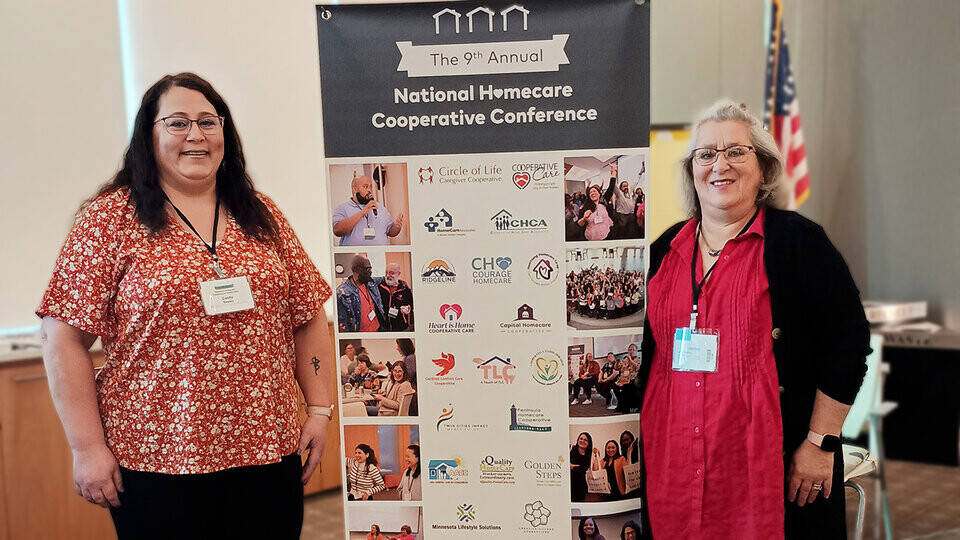
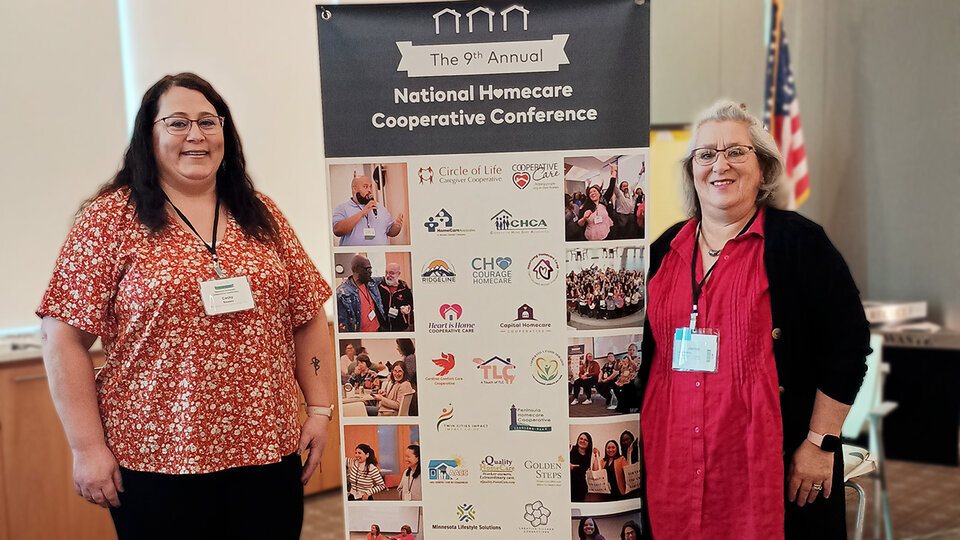
Bowers said the center pointed them toward grants that would help with things like startup costs, marketing and attending a conference to learn more about the business model, and a lawyer who helped them with incorporation and other legal paperwork. The center also helped Bowers attend the National Home Care Cooperative Conference sponsored by the ICA Group, leaving her feeling inspired and energized to come home and finish the process, she said.
In addition, the center connected the new business to resources such as Elevate, a new, national support organization with a mission to strengthen, scale and unite homecare cooperatives. Bowers and Fitzsimmons actively participate in Elevate, learning from others across the United States.
The center also brought in Becky Parker with the Nebraska Enterprise Fund, based in North Platte, who has been working alongside the cooperative as it moves forward. This collaborative approach was critical to the success. While the center works with communities at all phases of developing a cooperative from exploration, implementation and sustainability, this is Nebraska’s first worker cooperative model and the first time the center worked with homecare providers.
“We’re more of a coach, because we want (those forming business) to have the conversation,” Houlden said. “You know your community better than I do, but we help answer questions and connect them with resources.”
Fitzsimmons said the business structure felt right to them primarily because the authority rests with people on the ground doing the work and living in the community. They are able to explain to potential clients that the people making decisions about rates, for example, might be friends or neighbors, not someone at a corporation’s headquarters states away. The same goes for the employees, who are able to contribute to decisions about their own jobs.
“We make decisions together,” Fitzsimmons said. “You know you’re an owner of this cooperative and you get to make the decisions. You don’t have somebody telling you what you’re going to do or how you’re going to do it.”
Having the support of the center and other resources provided some credibility, Fitzsimmons said, and gave them a sounding board for when they reached less familiar territory. The resources eased the process and helped the worker-owners be prepared for operations, Bowers said.
“Some of the documents needed to start the business were available to me to edit and change to make usable for our cooperative,” Bowers said. “Republican River Valley Homecare is now able to hire local caregivers in our community to care for individuals. If we do this as a co-op, I’m not the only one doing this by myself, and the support and teamwork is amazing.”
In an area where services are lacking or are farther away, a homecare worker cooperative like this helps the area’s aging population stay closer to family and in a familiar place. This means peace of mind for family members but also quality of life for the aging population.
“It’s one thing to be taken away from the community in which they’ve lived their whole life, or for the families to be able to visit them,” Fitzsimmons said. “Or you have family members that don’t live around here who are concerned about their loved one. We can go in and that way they know someone is coming in and helping that loved one … If they can stay at home and stay in their community and go to their church, it makes for a lot happier elderly people.”
For more information, visit the Nebraska Cooperative Development Center website.
Share
Tags
High Resolution Photos
HIGH RESOLUTION PHOTOS